A chain was a linear series of rings, linked together, that was usually crafted from metal.
Description
A typical chain was about 10 feet (3 meters) long[2] and weighed from 2 to 3 pounds (0.91 to 1.4 kilograms).[1][2] Market prices varied wildly, ranging from as little as 5 silver pieces[1] to as much as 30 gold pieces.[2] Longer, 25‑foot (7.6‑meter) chains were sold by Aurora's Emporium in all manner of sizes. Depending on the thickness and material, they could bear various loads, as depicted in the following table.[3]
| Material | Diameter | Cost | Weight | Load |
|---|---|---|---|---|
| Iron | 0.125 in (3.18 mm) | 6 sp | 6 lb (2.7 kg) | 12 lb (5.4 kg) |
| Iron | 0.25 in (6.4 mm) | 2 gp | 18 lb (8.2 kg) | 96 lb (44 kg) |
| Iron | 0.5 in (13 mm) | 5 gp | 36 lb (16 kg) | 970 lb (440 kg) |
| Iron | 0.75 in (19 mm) | 9 gp | 98 lb (44 kg) | 2,300 lb (1,000 kg) |
| Iron | 1 in (2.5 cm) | 17 gp | 130 lb (59 kg) | 5,000 lb (2,300 kg) |
| Iron | 2 in (5.1 cm) | 25 gp | 210 lb (95 kg) | 12,000 lb (5,400 kg) |
| Iron | 3 in (7.6 cm) | 35 gp | 400 lb (180 kg) | 27,000 lb (12,000 kg) |
| Iron | 4 in (10 cm) | 60 gp | 700 lb (320 kg) | 65,000 lb (29,000 kg) |
| Steel | 0.125 in (3.18 mm) | 12 sp | 6 lb (2.7 kg) | 24 lb (11 kg) |
| Steel | 0.25 in (6.4 mm) | 4 gp | 18 lb (8.2 kg) | 192 lb (87.1 kg) |
| Steel | 0.5 in (13 mm) | 10 gp | 36 lb (16 kg) | 1,940 lb (880 kg) |
| Steel | 0.75 in (19 mm) | 18 gp | 98 lb (44 kg) | 4,600 lb (2,100 kg) |
| Steel | 1 in (2.5 cm) | 34 gp | 130 lb (59 kg) | 10,000 lb (4,500 kg) |
| Steel | 2 in (5.1 cm) | 50 gp | 210 lb (95 kg) | 24,000 lb (11,000 kg) |
| Steel | 3 in (7.6 cm) | 70 gp | 400 lb (180 kg) | 54,000 lb (24,000 kg) |
| Steel | 4 in (10 cm) | 120 gp | 700 lb (320 kg) | 130,000 lb (59,000 kg) |
| Silver | 0.125 in (3.18 mm) | 12 gp | 6 lb (2.7 kg) | 12 lb (5.4 kg) |
| Silver | 0.25 in (6.4 mm) | 40 gp | 18 lb (8.2 kg) | 96 lb (44 kg) |
| Silver | 0.5 in (13 mm) | 100 gp | 36 lb (16 kg) | 970 lb (440 kg) |
| Gold | 0.125 in (3.18 mm) | 120 gp | 6 lb (2.7 kg) | 12 lb (5.4 kg) |
| Gold | 0.25 in (6.4 mm) | 400 gp | 18 lb (8.2 kg) | 96 lb (44 kg) |
| Gold | 0.5 in (13 mm) | 1000 gp | 36 lb (16 kg) | 970 lb (440 kg) |
Availability
Most blacksmiths in the Realms could produce chains as needed,[4] though some lacked the skill to make truly fine chains. The knowledge of how to produce chains went as far back as the first dwarves. In many human communities, urban gnome and dwarf artisans pioneered fine chain and wire crafting.[5]
Trade
- The Arnaden region of south Faerûn was known for exporting quality chains,[6] particularly the city of Yeshpek, whose trade earned it the name "City of Chains".[7]
- Aurora's Emporium and Aurora's Whole Realms Catalogue, as detailed prior, sold a wide variety of chains.[3]
- Charn's smithy in Tyrluk, a small village in Cormyr.[8]
- The city of Crimmor's Smiths Guild.[9]
- Golden Key Locksmiths, a locksmith business in the city of Waterdeep, sold door chains imported from the Moonshae Isles that were said to have been hardened by the fire of dragons.[10]
- Hornshield Keep in the West Reaches of Cormyr had a small but thriving community of chainmakers and other tradesmen.[11]
- The Jewelers' Guild and the Most Careful Order of Skilled Smiths & Metalforgers of Waterdeep made, traded, and used chains.[12] The cost of their chains, depending upon the size and strength desired, ranged from 1 to 5 gp per 1 yard (0.91 meters).[13]
- The city of Khôltar was devoted to metalworking, and the shop of Oraundro Nempeth's sold chains, as well as rope, cord, twine, wire, and tying rings.[14][15]
- Maukshoun's Rope, Cable, and Chain[16] and Muldryn's Chainworks, shops that dealt in bindings in the city of Ravens Bluff.[17]
- The small trail town of Soumar had many merchants who dealt in chains and cages.[18]
- Szantel's Ropes, Cords, Chains, and Mesh, a shop in the city of Arabel.[19]
- Thardregh Droon, a traveling merchant in the late 14th century DR, dealt in ornamental chains.[20]
- Vilteern's Fine Chains, a shop in the Duthcloim district of Menzoberranzan.[21]
Usages
- Chains were often used to bind things or to connect them together, such as binding prisoners with manacles.[3]
- Chains were often used in jewelry,[3] such as necklaces.
- Chains were commonly used as leashes for pet animals.[22]
- Chains were commonly used on ships to hold anchors.[3]
- Chains were sometimes used in place of ropes for grappling hooks.[23]
- Huge chains, referred to as harbor chains, were strung across the bottom of harbor mouths and raised whenever a port needed to prevent ships from entering or leaving a harbor.[24]
- Many businesses hung their exterior lanterns from chains so they could later be easily drawn up to a window, unhooked and pulled own, or lowered when it came time to refill them.[25]
- Many cooks in the Realms used chains to hold cooking pots over hearths.[5]
- Chains could also be wielded as bludgeoning weapons,[1][26] with some elven bladesingers being particularly proficient in this manner of fighting.[27] However, chains were also adapted into a variety of more complicated weapons, such as spiked chains,[28] the chijiriki, kusari-gama,[29] and flails.[30]
Spell Components
Chains were used as a material component in a number of spells:
- Binding chain of fate required a small chain made of silver.[31]
- Blood link required a chain made of zalantar wood.[32]
- Galather's gnostic chain required simply three joined links of chain of any material in order to cast.[33]
- Howling chain and Sighing chain both required a length of at least three joined links of chain, made of either fine steel or another pure metal.[34]
- Shield of chains, a spell that conjured a barrier of flailing chains of force energy, only required a single link from a used chain to cast.[35]
- Whirlchain required a metal chain that was longer in length than the user's hand.[36]
Notable Chains
- Chanting Chain, a massive steel chain of fourteen links, treated with everbright, that was sacred to the Talassan faith.[37]
- Gond the Wonderbringer once forged a sturdy chain,[38][39] made with metal from Cocytus,[39] that was used to trap Kezef the Chaos Hound in the Barrens of Doom and Despair.[38][39][note 1]
- The Facade, a magical Imaskari mask that consisted largely of chains, which wrapped around the wearer's head like gauze.[40]
- The Ivory Chain of Pao, a legendary artifact of Shou Lung history that was crafted by the Lesser Immortal Master Pao and had the power to bind any spirit or being of the outer planes.[41][42]
- The demon lord Kostchtchie was once shackled by Zariel in a Avernian ravine with magical chains that continuously tightened over his body.[43]
- The Olympian deity Prometheus was for a long time bound to the summit of the colossal Mount Aetna in Olympus by magical chains that were virtually impossible for all to break but the Olympian deity Zeus.[44]
Notable Users
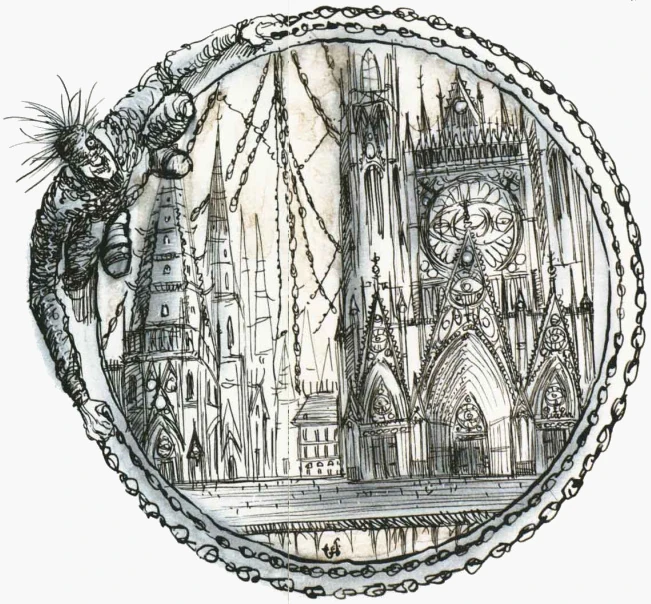

You really badly want some chains in the Nine Hells? Then have a whole City of Chains full of chain devils and chain golems.
Chain Creatures
Some creatures in the Realms and across the planes had chains as part of their physiology or had a special connection with chains in general:
- Angels of torment wreathed themselves in cruel, hooked chains.[45]
- Kyton, otherwise known as chain devils, were humanoid devils covered in chains[46] that they had the power to animate and use as weaponry. If a ritual called the "Gift of Chains" was undergone, a kyton had the expanded power to animate loose chains around them, make them gain 15 feet (4.6 meters) of length, or manifest jagged spikes.[47] They primarily dwelled within a metropolis called the City of Chains, which aptly was suspended in Minauros by unfathomably long and razor-augmented chains, connected to posts positioned throughout the city.[48]
- Chain golems, a variety of construct created by chain devils, were wholly made up of chains which varied in size and shape.[49]
- Mated pairs of astral dragons had magical chains that bound them together, which manifested after mating. These chains could extend up to 100 feet (30 meters) in length and were said to be a sign of their devotion to one another.[50]
- Some poltergeists were wrapped in heavy chains, upon which were attached items that represented the evil actions they had committed in life.[51]
- Zelekhut, one of the subraces of intelligent constructs known as the inevitables, had spiked chains built into their bodies that they could spring out from their forearms to fight with.[52]
Individuals
- Ashok, a shadar-kai, fought with a chain and dagger.[53]
- Haku, a member of the yakuza in Wa, fought with a chain and knife.[54]
Races & Sentient Creatures
- In ancient times, the star elves were known to macerate their dead before interring them in ossuaries. These polished bones would be bundled up with silver chains and then topped with the deceased's skull.[55]
History
Throughout the 1200s DR, the Realms experienced a dramatic rise in the use of fine chains in jewelry and garment adornment. This led to an in an increasing demand for fine and even finer chain.[5]
Reputation
Great Chain Bridge of Ra-Khati was a famous bridge crossing the Jumpa River Gorge that was constructed of iron chains.[56]
Appendix
Notes
- ↑ Since 2nd edition, Forgotten Realms sourcebooks have stated that Tyr lost his hand to Kezef the Chaos Hound. Since 1st edition, core sourcebooks have instead recounted the real-world myth of Tyr losing his hand to the monstrous beast Fenris Wolf, who was the offspring of Loki. While the 3rd-edition sourcebook Faiths and Pantheons states that Tyr lost the hand in battle with Kezef, all earlier and later sources claim that it was rather a test of strength of will, and the most detailed version of the story was elaborated in full in Champions of Ruin. In that Realmsian tale, Gond created chains with which to bind Kezef, and Mystra enchanted them. The gods made a deal with Kezef that they would lift a ban against him if Kezef could successfully escape from bonds. He only agreed to be bound if Tyr would insert his hand into the hound's maw. Tyr agreed, and Kezef bit his hand off, consuming it slowly over centuries. This tale undoubtedly was inspired by the real-world myth, which differs in that the evil canine was Fenris Wolf, the chains were created by the dwarves, and the gods involved were Tyr and the rest of the Aesir. Champions of Ruin goes on to explain that Kezef was later freed from his bonds by Cyric.
In the planar multiverse in which the world of Toril is found, the Norse pantheon canonically exists, and Tyr is stated in multiple FR sources to be the same individual as the Norse deity and to make one of his two divine realms in Asgard with the rest of that pantheon. Also, in core 1st edition and Planescape settings, Fenris Wolf is an entity still bound on an island outside of Asgard, so both Fenris Wolf and Kezef the Chaos Hound must coexist in the D&D multiverse, with one bound and the other free.
Ultimately, as this is a wiki for the Forgotten Realms setting, we assume that the story of Tyr's loss of his hand to Kezef is the true tale, and that the version told by the Asgardians must simply be a legend, likely inspired by a similar tale about another evil, primordial canine, although it is certainly possible that the alternative is true.
External Links
 Chain article at Wikipedia, The Free Encyclopedia.
References
- ↑ 1.0 1.1 1.2 1.3 Grant Boucher, Troy Christensen, Jon Pickens, John Terra and Scott Davis (1991). Arms and Equipment Guide. (TSR, Inc.), p. 108. ISBN 1-56076-109-1.
- ↑ 2.0 2.1 2.2 2.3 Jonathan Tweet, Monte Cook, Skip Williams (July 2003). Player's Handbook v.3.5. (Wizards of the Coast), p. 128. ISBN 0-7869-2886-7.
- ↑ 3.0 3.1 3.2 3.3 3.4 3.5 Jeff Grubb, Julia Martin, Steven E. Schend et al (1992). Aurora's Whole Realms Catalogue. (TSR, Inc), p. 73. ISBN 0-5607-6327-2.
- ↑ Wolfgang Baur (March 1998). “The Heart of the Forge”. In Dave Gross ed. Dragon #245 (TSR, Inc.), p. 26.
- ↑ 5.0 5.1 5.2 Ed Greenwood (October 2012). Ed Greenwood Presents Elminster's Forgotten Realms. (Wizards of the Coast), p. 128. ISBN 0786960345.
- ↑ Ed Greenwood, Sean K. Reynolds, Skip Williams, Rob Heinsoo (June 2001). Forgotten Realms Campaign Setting 3rd edition. (Wizards of the Coast), p. 151. ISBN 0-7869-1836-5.
- ↑ Steven E. Schend, Dale Donovan (September 1998). Empires of the Shining Sea. Edited by Julia Martin. (TSR, Inc.), p. 167. ISBN 0-7869-1237-5.
- ↑ Ed Greenwood (July 1995). Volo's Guide to Cormyr. Edited by Julia Martin. (TSR, Inc.), p. 173. ISBN 0-7869-0151-9.
- ↑ Ed Greenwood (August 2005). “Crimmor: City of Caravans”. In Erik Mona ed. Dragon #334 (Paizo Publishing, LLC), p. 29.
- ↑ Ed Greenwood (January 1993). Volo's Guide to Waterdeep. (TSR, Inc.), pp. 15–16. ISBN 1-56076-335-3.
- ↑ Ed Greenwood (July 1995). Volo's Guide to Cormyr. Edited by Julia Martin. (TSR, Inc.), p. 212. ISBN 0-7869-0151-9.
- ↑ Ed Greenwood (1987). Waterdeep and the North. (TSR, Inc), pp. 41–42. ISBN 0-88038-490-5.
- ↑ Ed Greenwood (1987). Waterdeep and the North. (TSR, Inc), p. 30. ISBN 0-88038-490-5.
- ↑ Ed Greenwood (April 2001–May 2003). Elminster Speaks archive (Zipped PDF). Elminster Speaks. Wizards of the Coast. p. 77. Archived from the original on 2016-11-01. Retrieved on 2016-09-03.
- ↑ Ed Greenwood (2003-01-22). Part #59: Khôltar, Part 10, Hungry in Handrornlar, and More. Elminster Speaks. Wizards of the Coast. Archived from the original on 2016-11-01. Retrieved on 2017-10-28.
- ↑ Ed Greenwood (October 1998). The City of Ravens Bluff. Edited by John D. Rateliff. (TSR, Inc.), p. 105. ISBN 0-7869-1195-6.
- ↑ Ed Greenwood (October 1998). The City of Ravens Bluff. Edited by John D. Rateliff. (TSR, Inc.), pp. 138–139. ISBN 0-7869-1195-6.
- ↑ Ed Greenwood (1994). Volo's Guide to the Sword Coast. (TSR, Inc), p. 117. ISBN 1-5607-6940-1.
- ↑ Eric Haddock (1994). Cormyr. (TSR, Inc), pp. 18–19. ISBN 1-56076-818-5.
- ↑ Ed Greenwood (April 2001–May 2003). Elminster Speaks archive (Zipped PDF). Elminster Speaks. Wizards of the Coast. pp. 1–2. Archived from the original on 2016-11-01. Retrieved on 2016-09-03.
- ↑ Ed Greenwood (1992). Menzoberranzan (The City). Edited by Karen S. Boomgarden. (TSR, Inc), pp. 40–41. ISBN 1-5607-6460-0.
- ↑ Jeff Grubb, Julia Martin, Steven E. Schend et al (1992). Aurora's Whole Realms Catalogue. (TSR, Inc), p. 10. ISBN 0-5607-6327-2.
- ↑ Curtis Scott (March 1992). Pirates of the Fallen Stars. (TSR, Inc), p. 103. ISBN 978-1560763208.
- ↑ Curtis Scott (March 1992). Pirates of the Fallen Stars. (TSR, Inc), p. 52. ISBN 978-1560763208.
- ↑ Ed Greenwood (October 2012). Ed Greenwood Presents Elminster's Forgotten Realms. (Wizards of the Coast), pp. 66–67. ISBN 0786960345.
- ↑ Jim Zub, Stacy King, Andrew Wheeler (July 2019). Warriors & Weapons. (Ten Speed Press), p. 117. ISBN 978-1-9848-5642-5.
- ↑ Steve Kenson, et al. (November 2015). Sword Coast Adventurer's Guide. Edited by Kim Mohan. (Wizards of the Coast), p. 142. ISBN 978-0-7869-6580-9.
- ↑ Jonathan Tweet, Monte Cook, Skip Williams (July 2003). Player's Handbook v.3.5. (Wizards of the Coast), p. 117. ISBN 0-7869-2886-7.
- ↑ Gary Gygax, David Cook, and François Marcela-Froideval (1985). Oriental Adventures. (TSR, Inc), pp. 46–47. ISBN 0-8803-8099-3.
- ↑ Jonathan Tweet, Monte Cook, Skip Williams (July 2003). Player's Handbook v.3.5. (Wizards of the Coast), p. 116. ISBN 0-7869-2886-7.
- ↑ Eric L. Boyd (June 2005). City of Splendors: Waterdeep. (Wizards of the Coast), p. 152. ISBN 0-7869-3693-2.
- ↑ Ed Greenwood, Eric L. Boyd (1996). Volo's Guide to All Things Magical. (TSR, Inc), p. 24. ISBN 0-7869-0446-1.
- ↑ Ed Greenwood (1995). The Seven Sisters. (TSR, Inc), pp. 77–78. ISBN 0-7869-0118-7.
- ↑ Ed Greenwood (1995). The Seven Sisters. (TSR, Inc), pp. 84–85, 88–89. ISBN 0-7869-0118-7.
- ↑ Ed Greenwood (January 2000). Secrets of the Magister. (Wizards of the Coast), p. 104. ISBN 978-0786914302.
- ↑ Ed Greenwood and Doug Stewart (1997). Prayers from the Faithful. (Wizards of the Coast), p. 105. ISBN 0-7869-0682-0.
- ↑ Ed Greenwood and Doug Stewart (1997). Prayers from the Faithful. (Wizards of the Coast), pp. 18–20. ISBN 0-7869-0682-0.
- ↑ 38.0 38.1 Ed Greenwood, Sean K. Reynolds, Skip Williams, Rob Heinsoo (June 2001). Forgotten Realms Campaign Setting 3rd edition. (Wizards of the Coast), p. 254. ISBN 0-7869-1836-5.
- ↑ 39.0 39.1 39.2 Larian Studios (October 2020). Designed by Swen Vincke, et al. Baldur's Gate III. Larian Studios.
- ↑ Robert Sullivan (March 2001). “Bazaar of the Bizarre: Imaskarcana: Faces of Magic”. In Dave Gross ed. Dragon #281 (Wizards of the Coast), p. 89.
- ↑ Mike Pondsmith, Jay Batista, Rick Swan, John Nephew, Deborah Christian (1988). Kara-Tur: The Eastern Realms (Volume I). (TSR, Inc), pp. 36–37. ISBN 0-88038-608-8.
- ↑ David "Zeb" Cook (December 1993). Book of Artifacts. (TSR, Inc), pp. 46–47. ISBN 978-1560766728.
- ↑ Adam Lee, et al. (September 2019). Baldur's Gate: Descent into Avernus. Edited by Michele Carter, et al. (Wizards of the Coast), p. 104. ISBN 978-0-7869-6687-5.
- ↑ Gary L. Thomas ed. (May 1988). Tales of the Outer Planes. (TSR, Inc.), pp. 61–62. ISBN 978-0880385442.
- ↑ Brian R. James (April 2010). “Deities & Demigods: Torog, the King that Crawls.”. In Chris Youngs ed. Dungeon #177 (Wizards of the Coast) (177)., p. 75.
- ↑ Mike Mearls, Jeremy Crawford, Christopher Perkins (2014-09-30). Monster Manual 5th edition. Edited by Scott Fitzgerald Gray. (Wizards of the Coast), pp. 68, 72. ISBN 978-0786965614.
- ↑ Colin McComb, Dori Hein (February 1995). “Monstrous Supplement”. In Dori Hein ed. Planes of Law (TSR, Inc), p. 22. ISBN 0786900938.
- ↑ Robin D. Laws, Robert J. Schwalb (December 2006). Fiendish Codex II: Tyrants of the Nine Hells. Edited by Chris Thomasson, Gary Sarli, Penny Williams. (Wizards of the Coast), pp. 46–48. ISBN 978-0-7869-3940-4.
- ↑ Ed Bonny, Jeff Grubb, Rich Redman, Skip Williams, and Steve Winter (September 2002). Monster Manual II 3rd edition. (TSR, Inc), p. 44. ISBN 07-8692-873-5.
- ↑ Monte Cook (January 1996). A Guide to the Astral Plane. Edited by Miranda Horner. (TSR, Inc.), p. 71. ISBN 0-7869-0438-0.
- ↑ Doug Stewart (June 1993). Monstrous Manual. (TSR, Inc), p. 299. ISBN 1-5607-6619-0.
- ↑ Jeff Grubb, Bruce R. Cordell, David Noonan (September 2001). Manual of the Planes 3rd edition. (Wizards of the Coast), p. 178. ISBN 0-7869-1850-8.
- ↑ Jaleigh Johnson (July 2010). Unbroken Chain. (Wizards of the Coast). ISBN 978-0-7869-5626-5.
- ↑ Nigel Findley (1990). Ninja Wars. (TSR, Inc), pp. 35–36. ISBN 0-8803-8895-1.
- ↑ Greg A. Vaughan (September 2006). The Twilight Tomb. (Wizards of the Coast), p. 23. ISBN 0-7869-3947-8.
- ↑ David Cook (August 1990). “Volume I”. In Steve Winter ed. The Horde (TSR, Inc.), p. 64. ISBN 0-88038-868-4.